
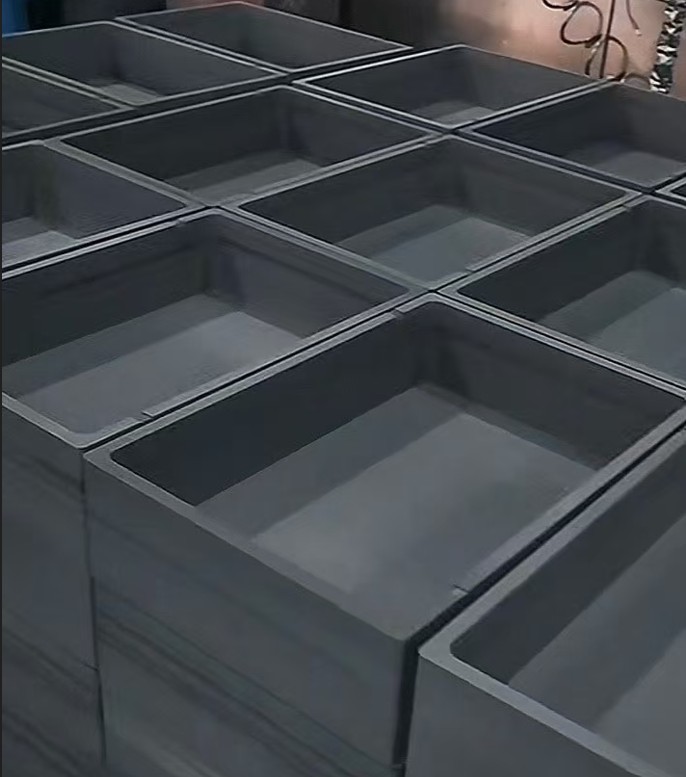
Melting and casting vessels for non-ferrous and rare metals — made from natural flake graphite and binder for fast heat conduction, high-temperature resistance and excellent thermal stability.
Graphite crucibles are melting vessels used for the melting and casting of non-ferrous metals and rare metals. Their main composition is natural flake graphite combined with a binder, which gives them fast heat conduction, high-temperature resistance, good thermal stability and no reaction with the molten charge — making them an ideal non-ferrous melting and casting vessel.
In high-temperature, strongly-oxidizing atmospheres graphite crucibles oxidize easily. A strongly-oxidizing atmosphere should therefore be avoided across different heat sources, otherwise service life will be reduced.
Classified by heating method into three types, each suited to different metals and furnaces.
Fuel-fired clay-bonded crucibles, mainly used for melting copper, aluminum, alloys and other non-ferrous metals.
High-purity graphite crucibles for resistance furnaces, mainly used for melting gold, silver and rare metals.
Mainly used in laboratories and for melting platinum, gold and other rare metals.
Copper, aluminum and alloys — fuel-fired graphite-clay crucibles.
Gold and silver melting — high-purity resistance-furnace crucibles.
Assay labs and platinum / rare-metal melting — ceramic crucibles.
High thermal conductivity for quick, even melting.
Stable service up to 2000°C depending on grade.
Withstands rapid heating and cooling cycles.
Does not react with the molten charge, keeping metal clean.
Handling note: avoid strongly-oxidizing atmospheres at high temperature — graphite oxidizes easily and service life will be reduced. Match the crucible grade to your heat source.
Tell us the metal, melting temperature, dimensions and quantity — we reply with the right grade and pricing within one business day.